
It probably is covered. Just not usefully.
A bicycle is personal property, so your homeowners policy does cover it — subject to your deductible, often at depreciated value, and possibly without liability once there's a motor involved. On a $2,500 deductible, a $4,000 e-bike produces a claim barely worth filing. That gap, plus liability on a bike that does 28 mph past pedestrians, is what a real e-bike policy is for. Here's what's in one, why the class matters, and when your existing policy is already fine. We shop it across 40+ carriers.
The short answer
Your homeowners or renters policy does cover an e-bike as personal property — but subject to your deductible, often at depreciated value, and with liability that may not apply once the bike reads as a motorized vehicle. A dedicated policy covers theft away from home, crash damage, liability, accessories and the battery with a small deductible built for the item. The three things to check are your deductible against the bike's value, whether off-premises theft is fully covered, and whether your liability actually extends to the class of bike you own.
"It's covered under the house" is technically true and practically useless.
Homeowners deductibles have climbed. A bike worth less than the deductible generates no claim at all, and one worth slightly more generates a claim that isn't worth the record it leaves.
Three things go wrong at once, and only one of them is obvious.
The deductible. Bicycles are personal property, so they're covered — after you absorb the first $1,000, $2,500 or more. E-bikes cost real money now, and the arithmetic frequently lands in the dead zone where the claim is technically valid and practically pointless.
The settlement basis. Personal property is often settled at actual cash value unless you've bought replacement cost, and a three-year-old e-bike depreciates like the electronics it partly is. You had a $5,000 bike; the check is for what a three-year-old one is worth.
The liability question. This is the one that matters most and gets asked least. Many homeowners forms exclude liability arising from motorized vehicles, with carve-outs that were written before e-bikes existed. Whether your policy treats a pedal-assist bike as a bicycle or as a motor vehicle is a question with a real answer — ask for it in writing before you need it, because a serious injury to someone else is the one loss on this page with no ceiling.
Class 1, 2 and 3 — and why an underwriter cares.
The three-class system is the framework manufacturers use and most states have adopted. It decides where you can legally ride and how an insurer reads the bike.
The motor helps only while you pedal and cuts out around 20 mph. The most widely accepted class on trails and shared-use paths, and the least likely to raise a motorized-vehicle question on a homeowners policy.
Has a throttle that can move the bike without pedaling, also cutting out around 20 mph. The throttle is the detail that makes some trail systems and some policy language treat it differently from Class 1.
Pedal assist up to roughly 28 mph. Fast enough to change both the trail access question and the insurance one — this is where liability language deserves a careful read rather than an assumption.
Where you're allowed to ride is a separate question from who pays.
Trail systems, greenways, city parks and federal land each set their own rules about which classes are permitted, and they don't agree with each other. Check with the specific trail system or land manager rather than with a general summary, including this one. But keep the two questions apart: the access rules govern where you may ride, and they say nothing about who pays when someone gets hurt. A bike that's perfectly legal on a path can still produce a liability claim your policy doesn't answer.
What a dedicated policy adds.
Which of these are included, optional or unavailable varies by carrier, bike class and value.
Theft, anywhere
From home, a garage, an apartment bike room, a car rack, a trailhead or outside a shop. Written with off-premises theft as the primary exposure rather than as an extension, and usually with a deductible sized to a bike instead of a house.
Crash & collision damage
Repairs to the bike after a crash, a fall on a trail, or a collision — including single-vehicle incidents where nobody else was involved and there's nobody to claim against.
Liability
Injuries and property damage you cause while riding, with legal defense. The coverage that matters most on a shared-use path, and the one most likely to be ambiguous on a homeowners policy.
Battery & charger
Covered as part of the bike for sudden accidental loss. A replacement battery is a serious line item on its own, and a spare kept for long rides is worth naming rather than assuming.
Accessories & upgrades
Racks, panniers, child seats, lights, locks, computers, phone mounts, upgraded wheels and drivetrain. Add them up honestly — on a well-set-up commuter they're a meaningful share of what's actually parked outside.
Medical payments
Helps with your own medical bills after a covered accident regardless of fault. A modest limit that moves quickly, and often the coverage that resolves an incident before it becomes a claim against anyone.
How you ride changes what you need.
The same coverage list gets weighted very differently depending on where the bike spends its time.

Trail & mountain
Crash damage leads here, not theft — though trailhead parking is its own exposure. Transport on a car rack matters too, and it's a common gap. Ask about damage in transit specifically.
Commuting & errands
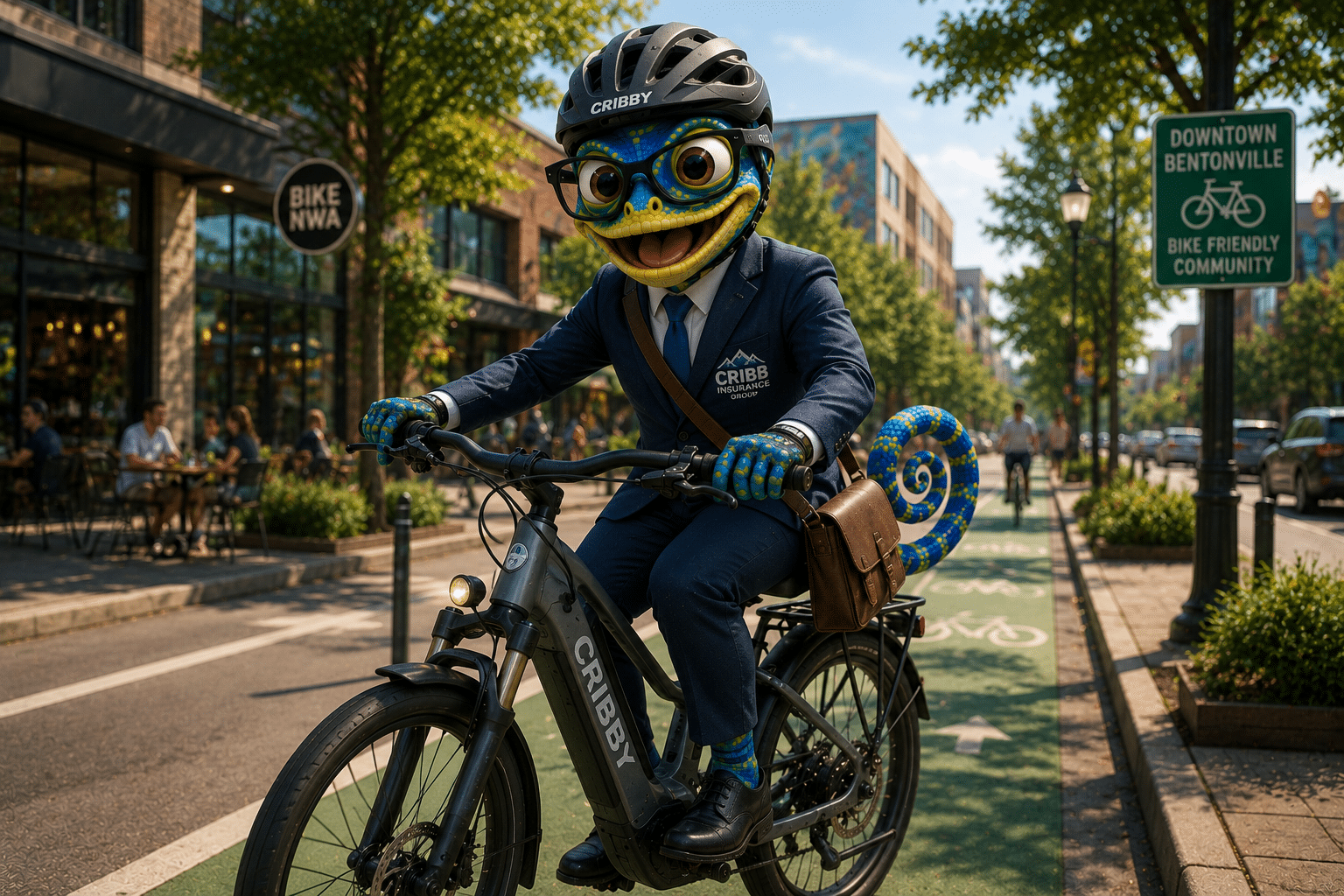
Theft is the headline, and it happens where the bike is locked all day. Liability rises too, because commuting means paths and streets shared with pedestrians and traffic rather than an empty trail.
High-value bikes
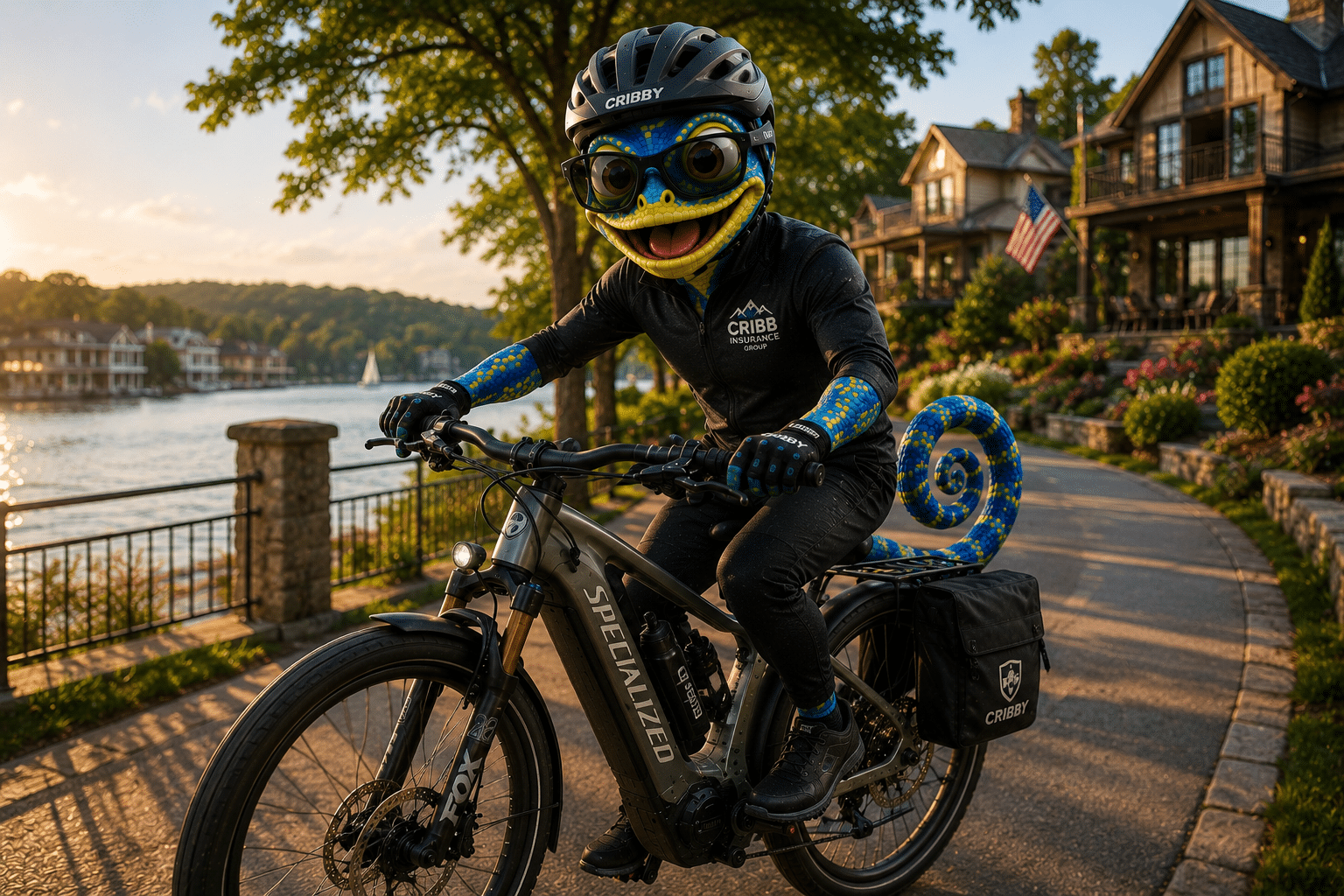
Once the bike passes what a homeowners policy will sensibly absorb, the settlement basis becomes the whole question. This is where a stated or agreed amount and a documented value stop being optional.
It gets stolen, or the battery does something you didn't expect.
Trailheads, bike rooms, car racks and shop fronts. An expensive bike locked in public for eight hours is a known target, and it's exactly the scenario a homeowners policy handles least well.
How it's locked and where it sleeps are underwriting questions.
Carriers ask about storage and security because both change the risk substantially. A bike inside a locked garage overnight is a different proposition from one on a balcony or in a shared apartment bike room, and a decent U-lock through the frame to something immovable is different from a cable through a wheel. None of this is moralizing about how careful you are — it's how the policy gets priced and, occasionally, whether a claim gets paid, because some policies carry a locking requirement in the fine print.
The other one people don't see coming is the charger. Lithium-ion batteries can fail hard, and a charging fire is a property and liability event of an entirely different magnitude from a stolen bike. Charge on a hard surface away from exits, use the charger that came with the bike rather than a cheaper replacement, don't leave it charging unattended overnight, and tell us if you charge inside an apartment or a finished room rather than a detached garage — some carriers have become noticeably more careful about this, and it's better raised at quote than discovered at claim.
Sometimes the right answer is "you already have this."
We'll say so. A $1,200 commuter under a $500 deductible on a policy whose liability clearly extends to bicycles may not need anything else, and adding a separate policy would be selling you something you don't need. The cases where a dedicated policy genuinely earns its keep are a bike worth more than a couple of thousand dollars, a household deductible high enough to swallow the claim, regular off-premises parking, and a Class 3 bike or any situation where the liability answer isn't clear. If none of those describe you, we'll tell you to keep what you have — and record the serial number.
What an e-bike policy won't do.
Three exclusions worth knowing before you assume you're covered.
Wear, and a battery that aged
Worn brake pads, a stretched chain, a tire that finally gave up, and above all a battery that has lost capacity over three years of normal use. Insurance answers sudden accidental loss; capacity fade is the expected end of a consumable.
Racing & competition
Organized racing, timed events and downhill competition are excluded on most personal forms, practice included. Event organisers usually carry their own arrangements — confirm what they cover before you assume it's handled.
Delivery & business use
Using the bike for food delivery, courier work, tours or rentals is commercial use, and a personal policy generally won't respond. If the bike earns money, tell us — we'd rather place the right coverage than write one that won't answer.
More expensive bikes per square mile than almost anywhere.
Bentonville has become a genuine cycling destination, and the consequence for insurance is straightforward: there is an unusual concentration of expensive bikes here, parked at trailheads, loaded on racks, and locked outside coffee shops all day. The Razorback Greenway runs the length of the corridor and does the work of a commuting route, which puts fast bikes on a shared path alongside walkers, runners, dogs and children — the liability scenario on this page, happening several thousand times a day. The trail networks around Bentonville, Bella Vista, Rogers and Fayetteville add the crash-damage side of it.
The practical effect is that both halves of the exposure are elevated at once: the bikes are worth more than the national average, and they spend more time in public than a bike in a place without this much trail. That's a good argument for reading your own policy rather than assuming the default is adequate — and, occasionally, for discovering that it is.
Where we earn it.
The quiet mistakes on e-bikes are assuming the homeowners policy handles it without checking the deductible against the bike's value, never asking whether liability extends to a motorised bike, an accessory total nobody added up, and no record of the serial number when it's needed most. We put the deductible next to what the bike is actually worth so the gap is visible, get the liability question answered rather than assumed, total the accessories, and compare a dedicated policy against simply scheduling the bike on your existing coverage — which is sometimes the better answer. We don't adjust your claim and can't overrule an adjuster — but we build the policy to respond, and we compare it across our 40+ carrier markets rather than one company's appetite.
Priced to the bike, and it's usually a small number.
E-bike coverage is one of the less expensive things on a personal insurance page, but it varies too widely for a single meaningful figure. Price turns on the value of the bike, its class and top assisted speed, how and where you ride, where and how it's stored and secured, the accessory total, your chosen deductible and liability limit, whether it's scheduled onto an existing policy or written on its own, and prior claims. That's why we price it to the bike rather than post a number. This isn't a quote or a guarantee. Tell us what you ride and we'll build the real figure with you across our markets — including telling you if the answer is to change nothing.
What usually sits next to it.
E-bike insurance questions.
Does my homeowners insurance cover my e-bike?
Usually yes, and usually in a way that does not help much. A bicycle is personal property, so it is covered against the same causes of loss as the rest of your belongings, but it is subject to your homeowners deductible and it is often settled at depreciated value rather than replacement cost. On a policy with a two thousand five hundred dollar deductible, a four thousand dollar e-bike produces a claim worth a fraction of the bike, and filing it puts a claim on your record for the privilege.
The second issue is liability. Some homeowners forms exclude liability for motorized vehicles, and a faster class of e-bike is where that language starts to get read closely. That combination, a deductible that eats the claim and liability that may not apply, is the reason a separate policy exists.
What are Class 1, 2 and 3 e-bikes, and does the class matter for insurance?
The three-class system is the framework manufacturers use and most states have adopted. Class 1 is pedal assist only, with the motor cutting out around twenty miles per hour. Class 2 has a throttle that can move the bike without pedaling, also cutting out around twenty. Class 3 is pedal assist up to roughly twenty-eight miles per hour.
The class matters for insurance for two reasons. It affects where you are allowed to ride, because many trails and shared-use paths permit some classes and not others. And it affects how an underwriter reads the bike, because the faster and more throttle-driven it is, the more likely a homeowners policy treats it as a motorized vehicle for liability purposes. Know your class before you assume anything about coverage.
Is my e-bike covered if it is stolen from a trailhead or a bike rack?
It depends on the policy, and off-premises theft is exactly where the differences show up. Theft is the most common e-bike claim by a wide margin, and most of it happens away from home, at a trailhead, off a car rack, from an apartment bike room, or outside a shop.
A homeowners policy generally does extend to property away from the residence, but subject to the same deductible problem, and some policies limit what they will pay for property off the premises. A dedicated e-bike policy is written with off-premises theft as the main event rather than as an extension. Ask specifically about theft from a vehicle rack, because that is a common gap and a common loss.
Does e-bike insurance cover the battery?
Batteries are usually covered as part of the bike for sudden accidental loss such as theft or crash damage, and usually not covered for wearing out, which is what actually happens to most of them. A battery that has lost capacity over three years is a maintenance item, not a claim.
The more important battery question is the other direction. Lithium-ion batteries can fail badly, and a charging fire in a garage or an apartment is a property and liability event far larger than the bike. Charge on a hard surface, away from exits, using the charger that came with it, and tell us if you are charging inside a unit rather than a detached garage. Some carriers have become noticeably more careful about this.
Do I need liability coverage for an e-bike?
It is the coverage worth the most attention and it gets the least, because people think of an e-bike as a bicycle. A Class 3 bike travelling at twenty-eight miles per hour on a shared-use path with pedestrians, dogs, children and other cyclists can cause a serious injury, and the person injured has the same recourse against you that they would after any other accident.
Damage to the bike is a bounded number you can look up. An injury is not. Confirm whether your homeowners liability actually extends to the bike you own, and if it does not, or if you cannot get a clear answer, that gap is the strongest argument for a dedicated policy.
How do I get an e-bike insurance quote in Northwest Arkansas?
Start a personal quote online or call (479) 286-1066. Have the year, make, model and serial number, the class and top assisted speed, what you paid and what it would cost to replace today, the battery and charger details, an honest total for accessories and upgrades, where the bike is stored and how it is secured, and how you actually ride it.
Photographs help more than people expect. We will tell you plainly whether your existing homeowners or renters policy already handles it well enough, because sometimes it does, and we would rather say so than sell a policy nobody needed.
If our coverage explainers are useful, mark Cribb Insurance as a preferred source so more Northwest Arkansas riders can find our local, plain-English guides.
Send us the bike and your current deductible.
Tell us what you ride, what it's worth, where it sleeps and how you lock it — and we'll put your existing deductible next to the bike's value so the gap is visible, get a straight answer on whether your liability extends to it, total the accessories, and compare a dedicated policy against simply scheduling it onto what you already have. If the honest answer is that you're already fine, that's what you'll get.

Cribb Insurance Group Inc. is an independent insurance agency licensed in Arkansas. This page describes e-bike, electric bicycle and bicycle insurance in general, industry-standard terms for informational purposes only. It is not a policy, not an offer of insurance, and not a guarantee of coverage, availability, eligibility, or price.
Theft, physical damage, liability, medical payments, battery, accessory and transport coverages, along with limits, deductibles, settlement basis, security or storage requirements, covered causes of loss, and exclusions, are set by the carrier, vary by state and by policy and over time, are subject to the carrier's underwriting approval and eligibility, and apply only as written in the policy actually issued to you. Descriptions of what a homeowners or renters policy does or does not cover are general; your own policy language controls, including whether it treats an electric bicycle as a motorized vehicle for liability purposes. Wear and tear, mechanical breakdown, battery capacity loss, racing and competition, and delivery or other business use are commonly excluded.
References to Class 1, Class 2 and Class 3 describe an industry classification used by manufacturers and adopted in various forms by many states; they are general descriptions and not a statement of Arkansas law. Where you may legally operate an electric bicycle depends on state and local law and on the rules of the specific trail system, park, greenway or landowner, and those rules differ and change; confirm them with the applicable authority or land manager. Statements about battery charging describe general safety practice and are not engineering or fire-safety advice; follow the manufacturer's instructions for your battery and charger. Any cost or coverage descriptions are general and illustrative, not a quote, and not a guarantee; your premium and coverage are determined at quote and by the policy issued.
Last reviewed July 2026.